
Fighting Climate Change: China’s great Green Wall shows rapid forest growth as peatland restoration gains momentum in Europe
Vielen Dank, dass Sie sich für Automatic Translation entschieden haben. Derzeit bieten wir Übersetzungen aus dem Englischen ins Französische und Deutsche an, weitere Sprachen werden in naher Zukunft hinzukommen. Bitte beachten Sie, dass diese Übersetzungen von einem KI-Softwaredienst eines Drittanbieters erstellt werden. Wir haben festgestellt, dass die Übersetzungen größtenteils korrekt sind, aber nicht in jedem Fall perfekt. Um sicherzustellen, dass die Informationen, die Sie lesen, korrekt sind, lesen Sie bitte den Originalartikel auf Englisch. Wenn Sie einen Fehler in einer Übersetzung finden, auf den Sie uns aufmerksam machen möchten, wäre es sehr hilfreich, wenn Sie uns dies mitteilen würden. Wir können jeden Text oder Abschnitt korrigieren, sobald wir davon Kenntnis haben. Bitte zögern Sie nicht, unseren Webmaster zu kontaktieren, um uns auf Übersetzungsfehler hinzuweisen.
Two major land‑restoration efforts on opposite sides of the world are showing promising results, highlighting the growing role of nature‑based solutions in climate mitigation.
New research from China indicates that the country’s massive Great Green Wall project — where 66 billion trees have been planted since the 1970s — is producing forests that are growing faster than many natural woodlands, offering measurable gains in carbon storage and desertification control.
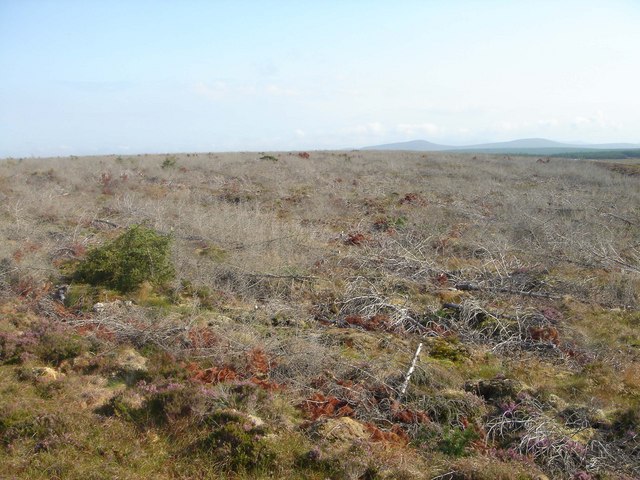 Photo Credits:

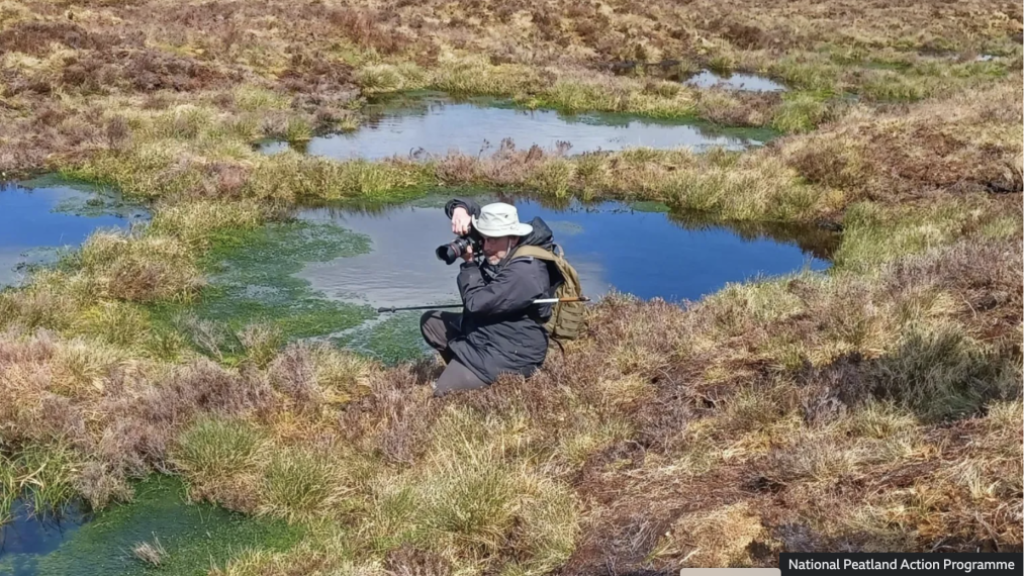
Above: National Peat Action Programme
Left: Peatland Restoration Forest planting on the Caithness Peatlands seriously damaged this unique environment. In a few places, including this location near the Caol Loch, the young trees have been felled in an attempt to restore the peatland.
Date: 16 August 2008
Source: From geograph.org.uk
Author: david glass
Attribution: (required by the license) david glass / Peatland Restoration /
Satellite analyses show that large sections of the afforestation belt are developing dense canopy cover and improved soil stability, countering earlier concerns that planted forests might struggle to survive in arid regions. Scientists say the findings demonstrate how long‑term, large‑scale ecological engineering can reshape degraded landscapes when supported by sustained monitoring and adaptive management.
Restoring peatlands capture carbon in Europe
“The Bogfather,” whose work focuses on re‑wetting damaged peatlands, restoring native vegetation, and reversing decades of ecological decline. Peatlands store more carbon per hectare than forests, making their recovery a critical component of Europe’s climate strategy.
Experts say the two initiatives — China’s expanding forest belt and Europe’s revived peatlands — illustrate complementary approaches to land‑based climate action: planting new forests where ecosystems have collapsed, and restoring ancient carbon sinks where natural processes can be revived.
Environmental agencies note that both projects face challenges, including water scarcity, land‑use pressures, and the need for long‑term funding. But early results suggest that large‑scale restoration, when grounded in science, can deliver substantial climate and biodiversity benefits
Cover Photo above: National Peat Action Programme
In text: Peatland Restoration Forest planting on the Caithness Peatlands seriously damaged this unique environment. In a few places, including this location near the Caol Loch, the young trees have been felled in an attempt to restore the peatland.
Date: 16 August 2008
Source: From geograph.org.uk
Author: david glass
Attribution: (required by the license) david glass / Peatland Restoration /
Further Reading:
https://share.google/GOBLZsJrfBaPEDNg0
https://www.livescience.com/planet-earth/plants/chinas-great-green-wall-the-gia…?
https://english.iae.cas.cn/research/202601/t20260120_1146170.html?
https://www.rgs.org/schools/resources-for-schools/chinas-great-green-wall?