

Corroded Sprinklers Blamed for Chemical Plant Blast That Forced 90,000 Indoors, Federal Probe Finds
Thank you for choosing Automatic Translation. Currently we are offering translations from English into French and German, with more translation languages to be added in the near future. Please be aware that these translations are generated by a third party AI software service. While we have found that the translations are mostly correct, they may not be perfect in every case. To ensure the information you read is correct, please refer to the original article in English. If you find an error in a translation which you would like to bring to our attention, it would help us greatly if you let us know. We can correct any text or section, once we are aware of it. Please do not hesitate to contact our webmaster to let us know of any translation errors.
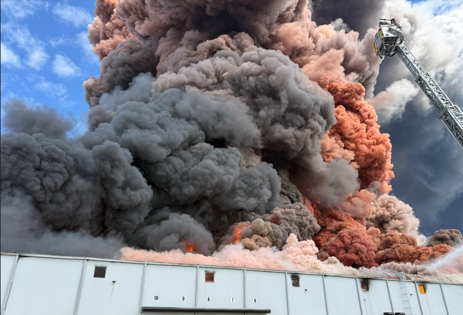
ATLANTA, GA — A newly released federal report has concluded that corroded sprinkler heads triggered the 2024 Biolab chemical plant fire in Conyers, Georgia — one of the most dangerous industrial incidents in recent U.S. history.
According to the U.S. Chemical Safety Board (CSB), more than 1,100 sprinkler heads at the facility were severely corroded when water leaked onto reactive chlorine‑based chemicals, causing a violent reaction that sent toxic smoke across the region.
The explosion and subsequent fire forced 90,000 residents to shelter in place, shutting down highways and overwhelming emergency services.
The CSB report found that maintenance failures and poor corrosion control allowed water to accumulate in the system, despite repeated warnings from employees. Former Biolab workers told Georgia Public Broadcasting (GPB) that safety lapses had been ignored for months, with malfunctioning alarms and inadequate training contributing to the disaster.
The fire burned for nearly 24 hours, releasing hazardous chlorine gas and prompting a multi‑agency response involving hazmat teams and environmental monitoring units. No fatalities were reported, but several firefighters and plant workers suffered respiratory injuries.
Investigators say the incident underscores the need for stricter oversight of chemical storage and sprinkler maintenance in facilities handling reactive compounds. The CSB has recommended new inspection protocols and corrosion‑resistant materials for fire‑suppression systems in chemical plants nationwide.
Biolab, a subsidiary of KIK Consumer Products, has pledged to cooperate with regulators and implement safety reforms. Cleanup and remediation at the Conyers site are ongoing.
Further Reading:
https://www.csb.gov/bio-lab-inc-conyers-fire-and-chemical-release-/
https://www.csb.gov/csb-releases-bio-lab-conyers-final-investigation-report/