
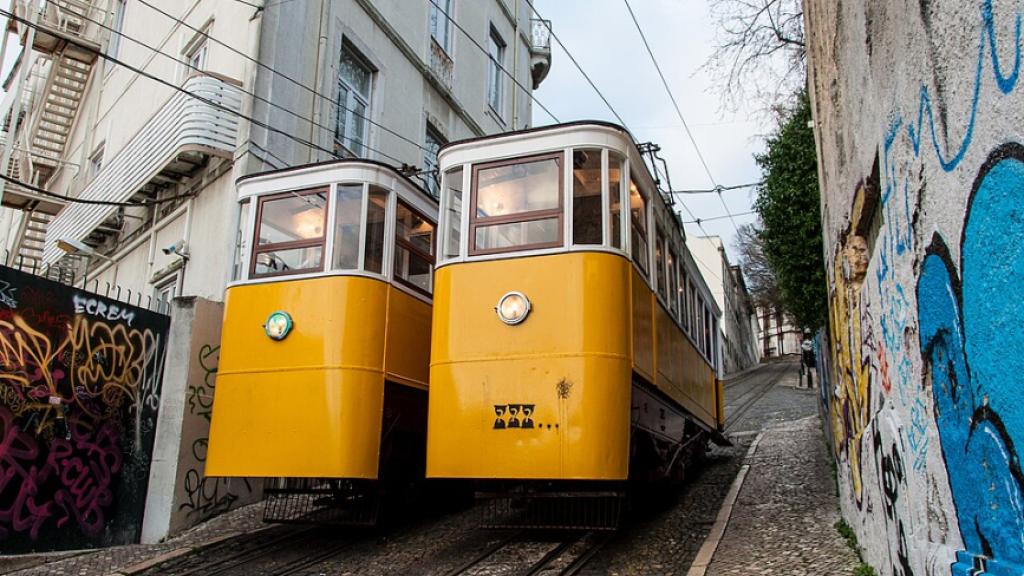
Gloria funicular tram derailment claimed 15 lives in Lisbon
Thank you for choosing Automatic Translation. Currently we are offering translations from English into French and German, with more translation languages to be added in the near future. Please be aware that these translations are generated by a third party AI software service. While we have found that the translations are mostly correct, they may not be perfect in every case. To ensure the information you read is correct, please refer to the original article in English. If you find an error in a translation which you would like to bring to our attention, it would help us greatly if you let us know. We can correct any text or section, once we are aware of it. Please do not hesitate to contact our webmaster to let us know of any translation errors.
On Wednesday, the iconic Gloria funicular railway derailed, killing at least 15 people and injuring 18 others. The tram-like funicular, a beloved symbol of the Portuguese capital and a magnet for tourists, crashed while ascending the steep hillside between Restauradores Square and the Bairro Alto district.
Emergency responders rushed to the scene, pulling victims from the wreckage as stunned onlookers watched.
“It’s a tragic day for our city,” said Lisbon Mayor Carlos Moedas. “Lisbon is in mourning; it is a tragic, tragic incident”.
The Gloria line has been in service since 1885 and is one of three historic funiculars still running in Lisbon. Its two cars are connected by a haulage cable and powered by electric motors. The system has long been celebrated for its charm and engineering—but Wednesday’s derailment has raised urgent questions about safety and maintenance amid Lisbon’s tourism boom.
President Marcelo Rebelo de Sousa expressed condolences and called for a swift investigation into the cause of the crash. While authorities have not released the identities or nationalities of the victims, they confirmed that foreign nationals were among the dead.
This incident echoes broader concerns about aging infrastructure in popular tourist destinations. A recent BBC article highlighted how historic transport systems, while culturally significant, often operate under outdated safety standards. Experts warn that modernization efforts must keep pace with rising tourist numbers to prevent future tragedies.
As Lisbon mourns, the city faces a reckoning: how to preserve its heritage while ensuring the safety of those who come to experience it.
Further Reading:
https://en.wikipedia.org/wiki/Ascensor_da_Gl%C3%B3ria_derailment
Photo Credit: Wikipedia Creative Commons License

The Gloria Funicular (in Portuguese, Elevador da Glória) is one of three active funiculars operating in Lisbon, Portugal. It carries passengers from the west side of the Avenida da Liberdade, in Restauradores Square, to Miradouro de São Pedro de Alcântara, in the barrio Alto section of town. It was opened on October 24, 1885 and was originally powered by water before being converted to steam in 1886 and finally to electricity in 1915.
Date: 22 March 2014, 07:22
Source: Gloria Funicular
Author: Mark Fischer
Camera location: 38° 42′ 54.27″ N, 9° 08′ 36.51″ W 
.jpg¶ms=038.715075_N_-009.143475_E_globe:Earth_type:camera_source:Flickr_&language=en)
View this and other nearby images on: OpenStreetMap