The Sedin Brothers spoke at Fire Rescue Canada 2026: ”Helmets, Hoses, and Hockey”: Leadership and Community Crossroads
Thank you for choosing Automatic Translation. Currently we are offering translations from English into French and German, with more translation languages to be added in the near future. Please be aware that these translations are generated by a third party AI software service. While we have found that the translations are mostly correct, they may not be perfect in every case. To ensure the information you read is correct, please refer to the original article in English. If you find an error in a translation which you would like to bring to our attention, it would help us greatly if you let us know. We can correct any text or section, once we are aware of it. Please do not hesitate to contact our webmaster to let us know of any translation errors.
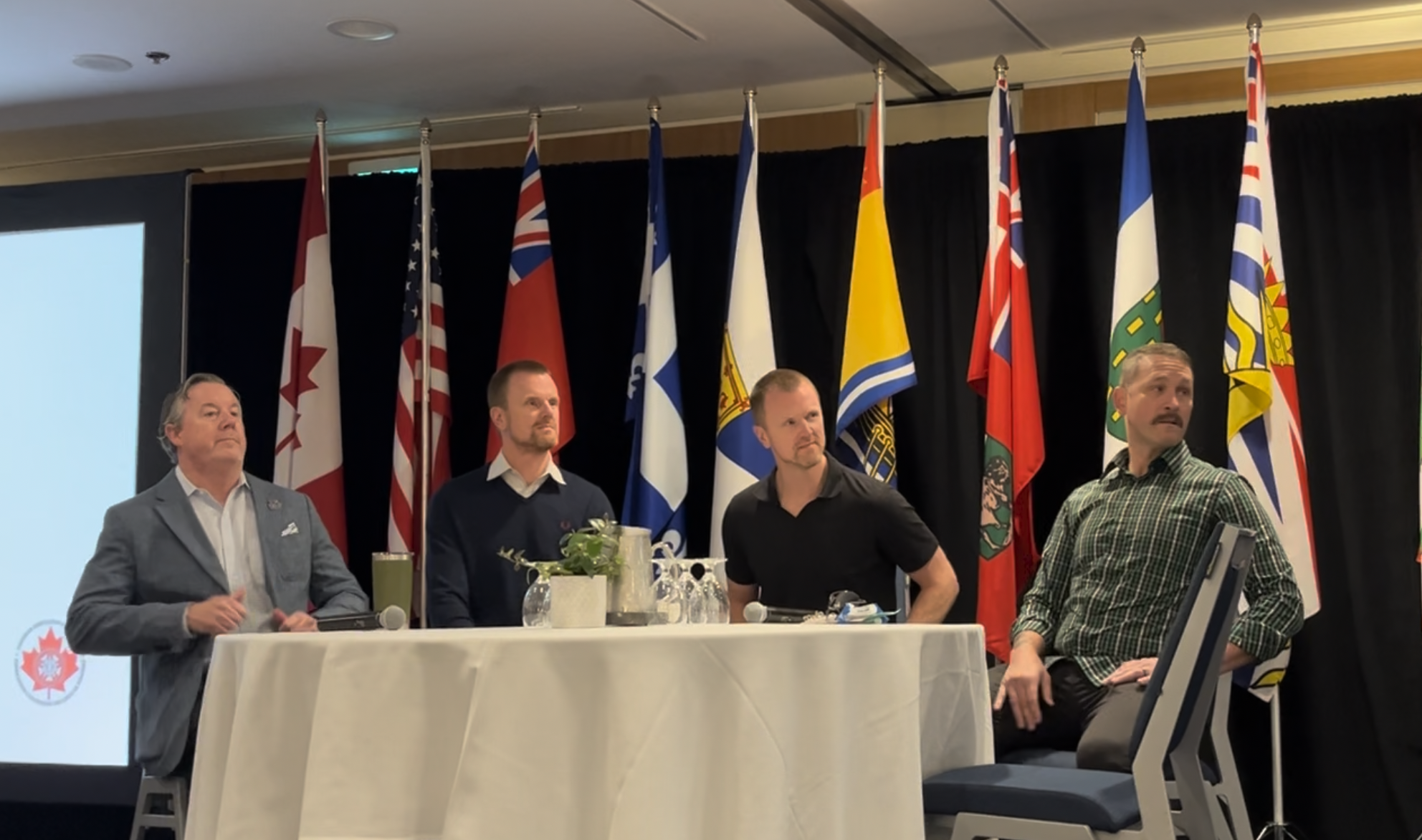
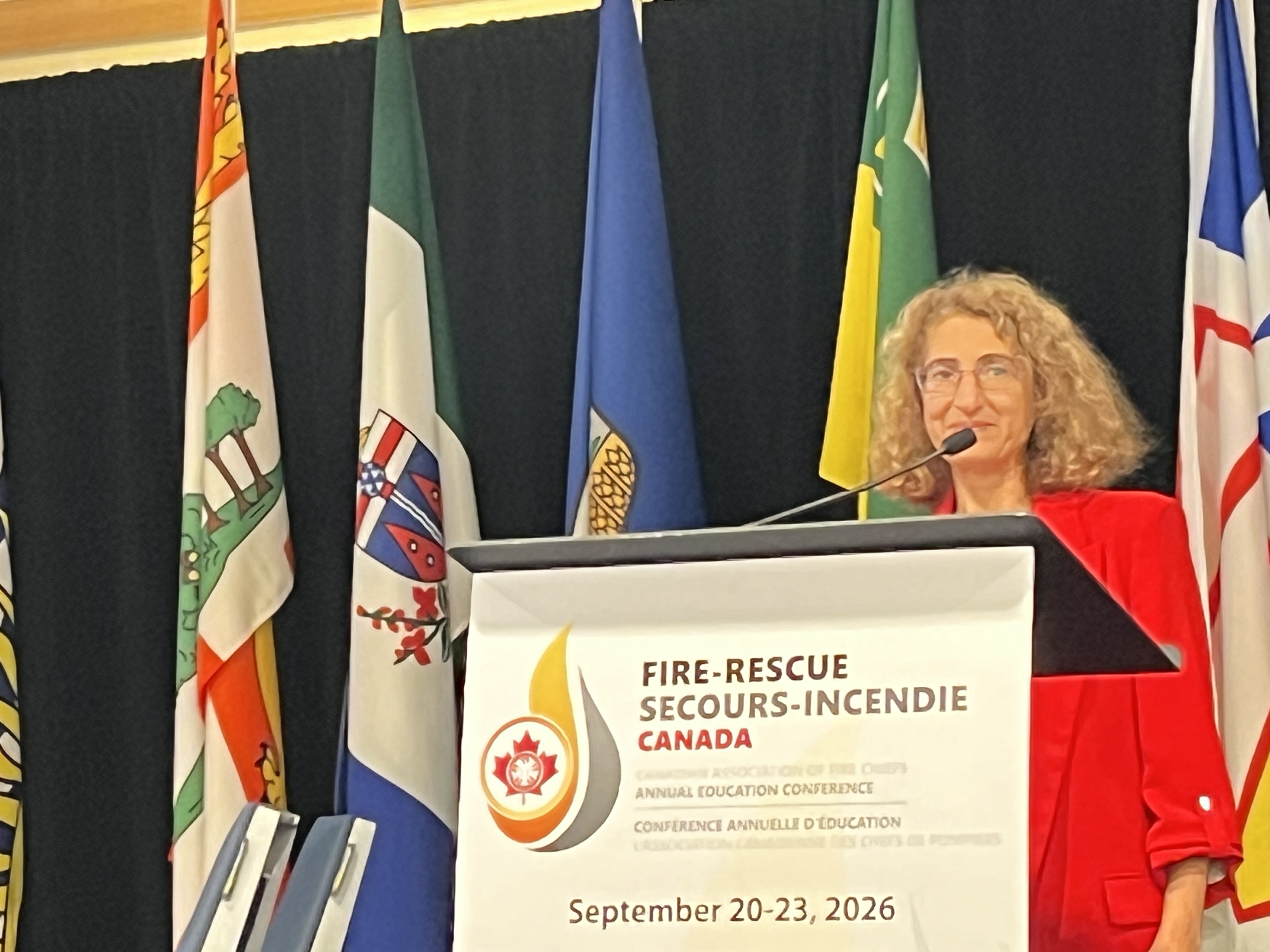
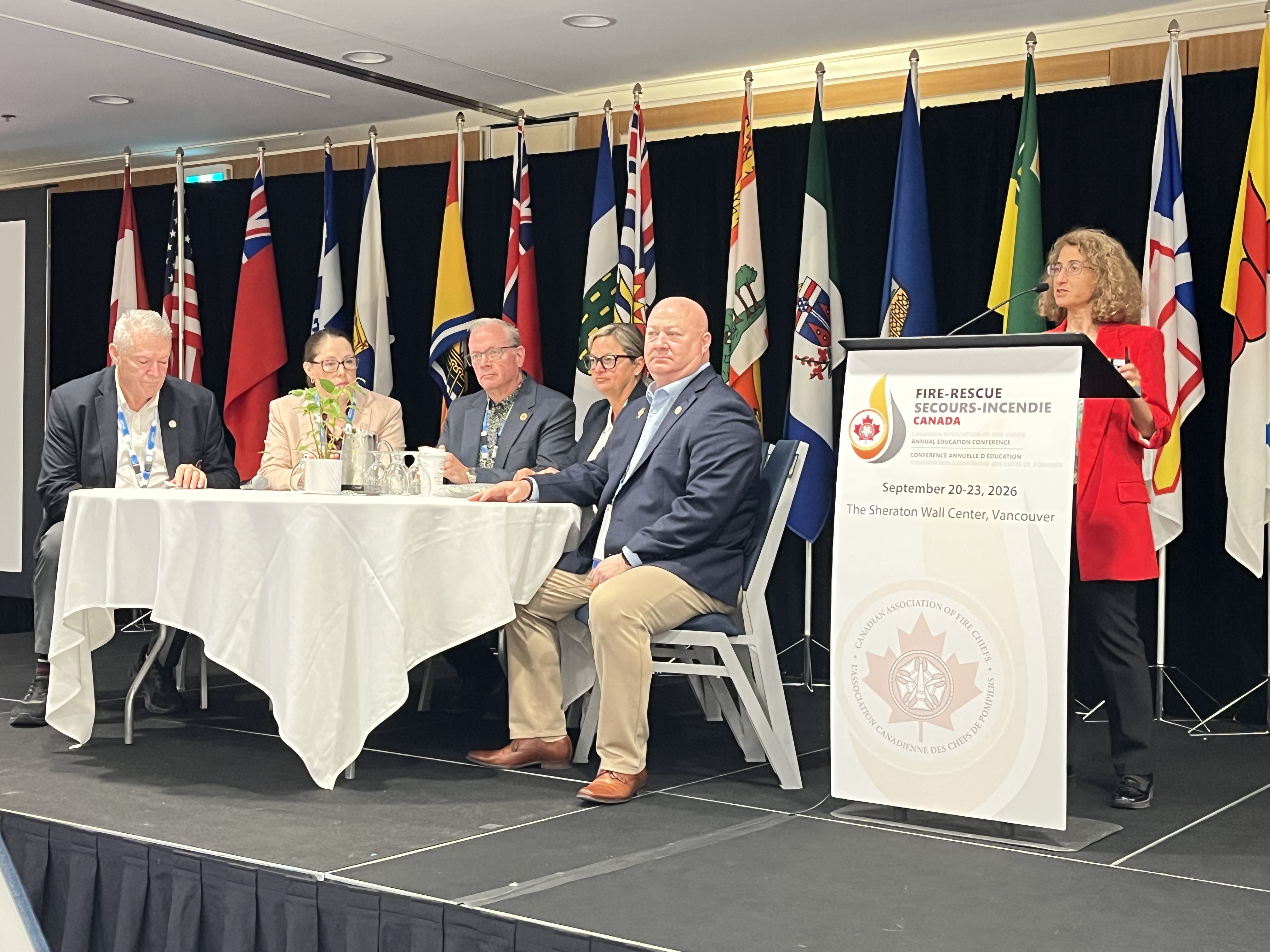
As part of Wednesday morning’s schedule of CAFC’s four day conference Fire Rescue Canada 2026, the plenary panel discussion ”Helmets, Hoses, and Hockey” brought together leaders from public safety and professional sports to explore shared principles in teamwork, crisis management, and community engagement.
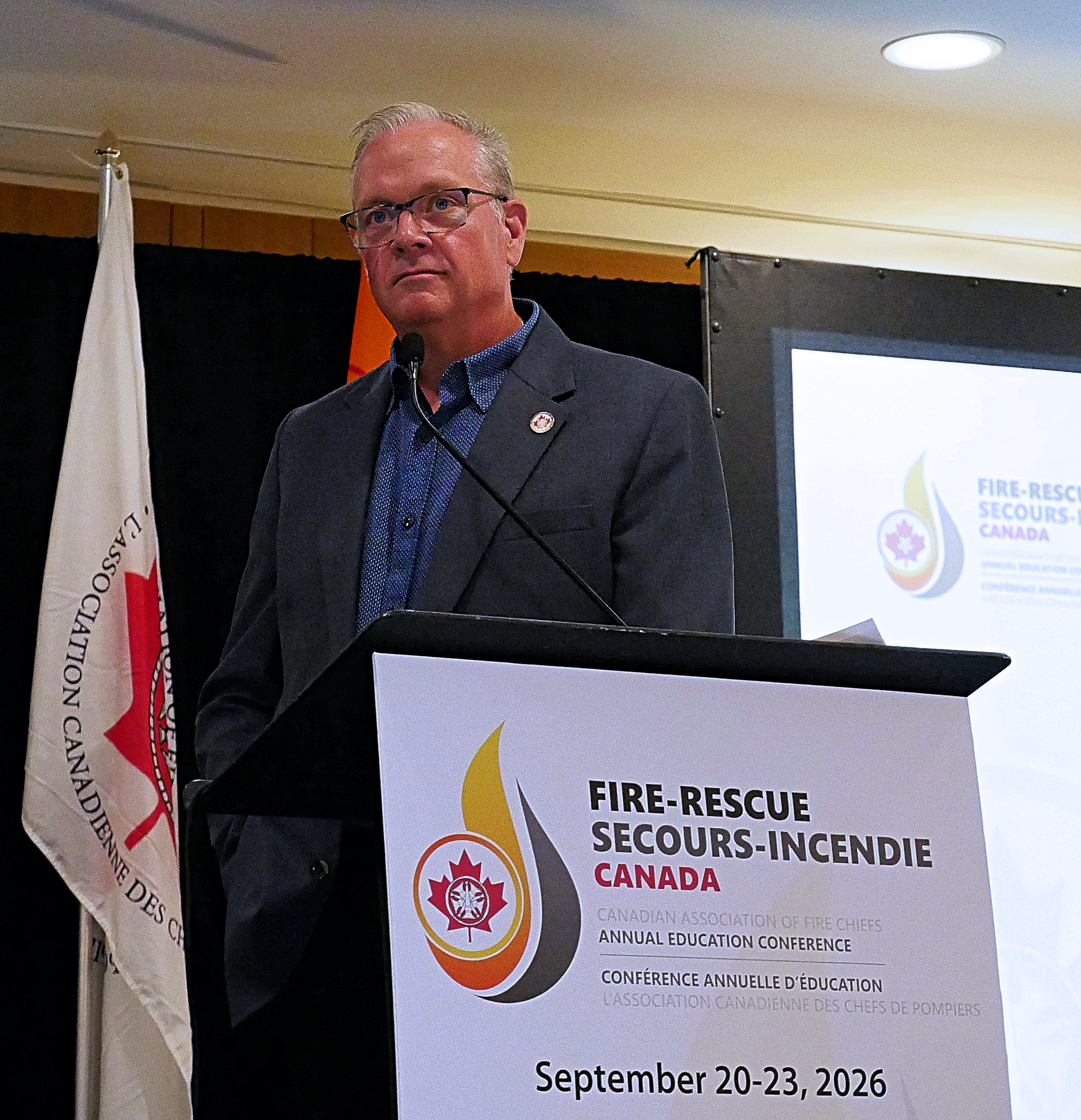
The panel discussion was moderated by the newly elected CAFC President Chief Paul Boissonneault.
The session highlighted parallel insights from the fire service and executive sports leadership, focusing on how both sectors build resilient teams and serve their communities.
Featured speakers for the panel include:
Fire Chief Bryce Luker of East Hawkesbury
Daniel Sedin, Co-President of Hockey Operations for the Vancouver Canucks
Henrik Sedin, Co-President of Hockey Operations for the Vancouver Canucks
Tim Hinchey, Chief Revenue Officer for the Vancouver Canucks
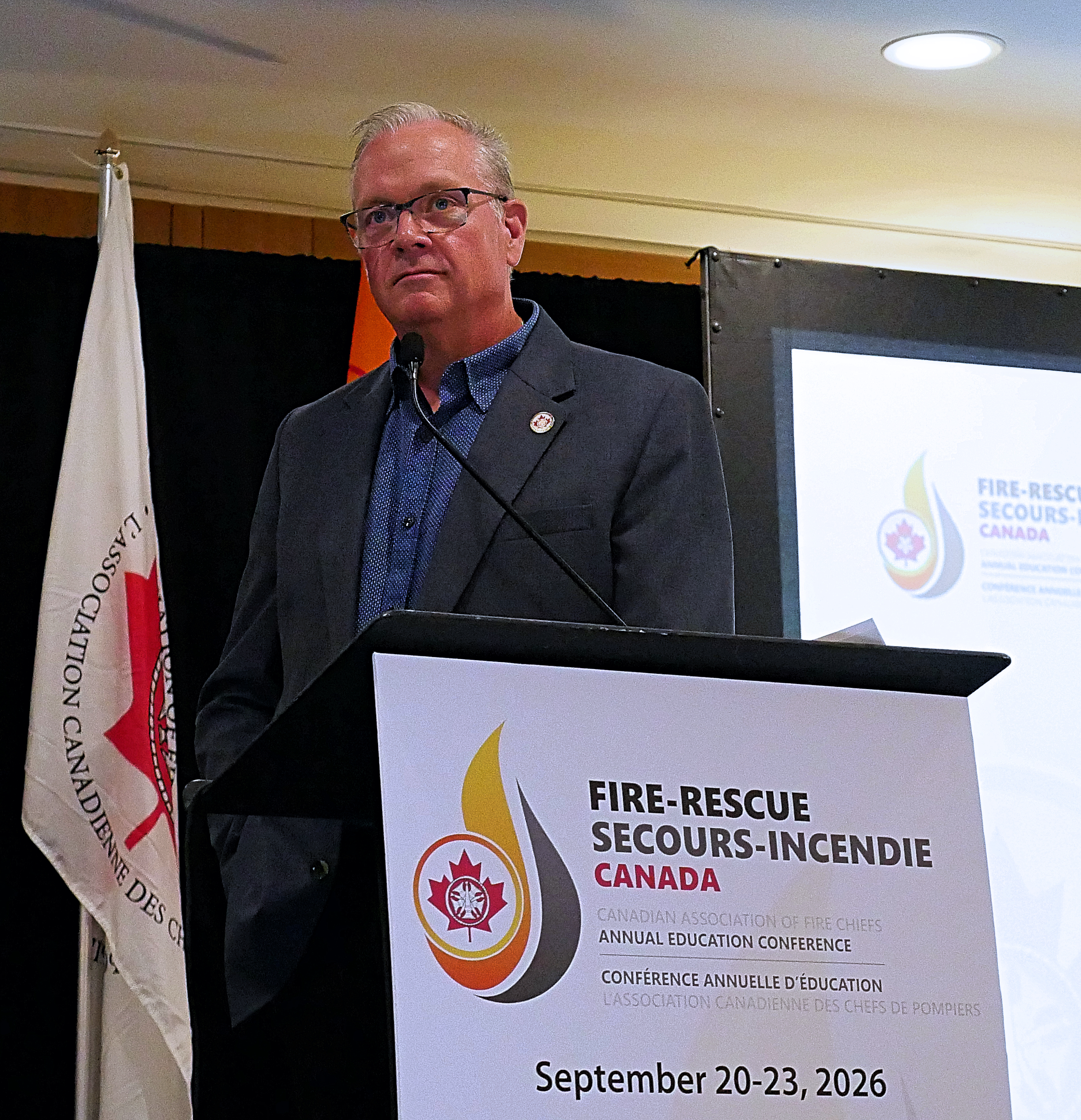
On Monday September 21, the 4 day conference ’Fire Rescue Canada 2026’ with Canadian Association of Fire Chiefs (CAFC) members from all over Canada started with a panel discussion on how fire departments handled the FIFA event this summer.
Speakers in the first session were Vancouver assistant Chief Daniel Cochraine, Operations Commander John Davison, Toronto Fire Services, and moderated by Chief Trevor Brice from Alberta.
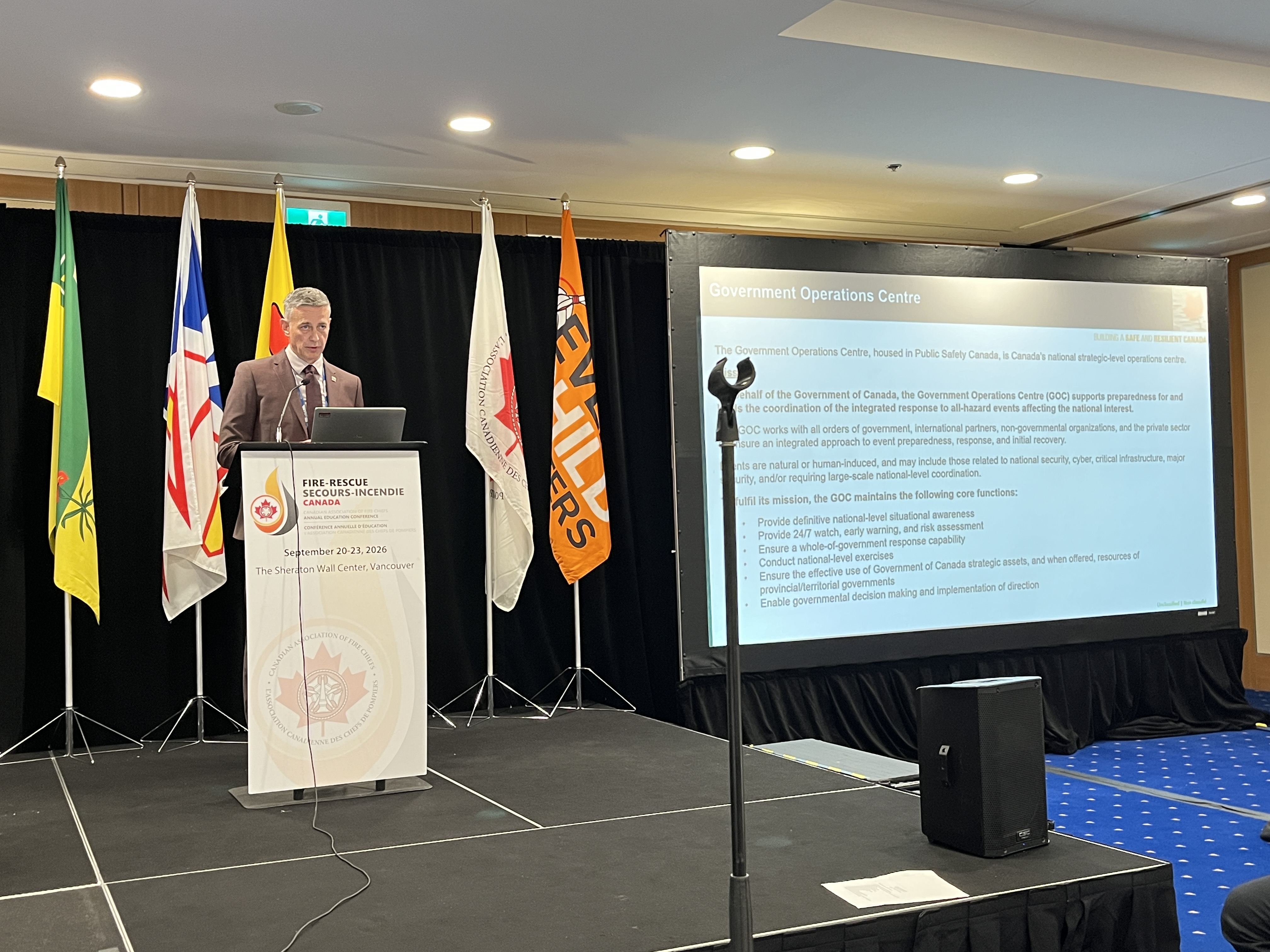
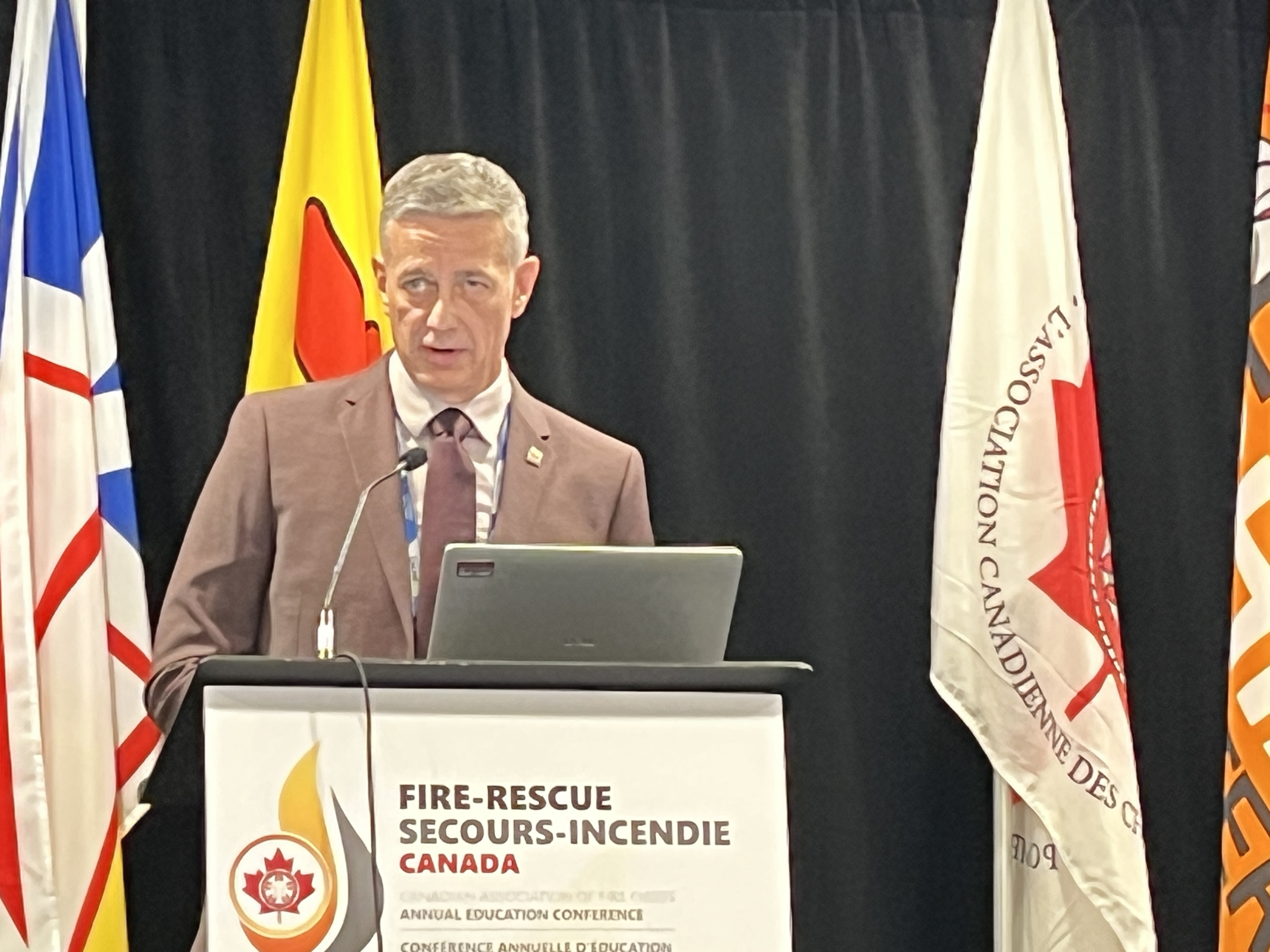
This was followed by Craig Oldham from the Canadian Government Operations Center for Public Safety speaking on how the center works across all of the Canadian provinces, particularly in regards to forest fires.
The conference started already on Saturday September 19 with Canadian Women in Fire & Rescue, meeting to create a new network within Canada, consisting of 1500 Canadian firefighters who identify as women from all of the provinces of the country.
Two Canadian CTIF Members of the CTIF Commission for Women in Fire & Rescue were present during this important annual conference.
Canada just became a full member of CTIF as of this year's Delegates Assembly, so Welcome to CTIF, Canada! We are looking forward to more interactions with you in the coming years!
Fire-Rescue Canada 2026: Key Themes, Leadership Insights, and Event Highlights
The Fire-Rescue Canada 2026 conference brought together fire service leaders, climate experts, researchers, and industry partners to address the rapidly evolving challenges facing modern fire and emergency services. Held over three days, the event featured strategic plenary sessions, interactive sponsor lightning talks, social gatherings, and networking opportunities centered on community resilience, mental health, operational leadership, and inclusivity.
Here is an overview of the primary themes and key highlights from the conference program.
1. Navigating Climate Realities & Wildfire Readiness
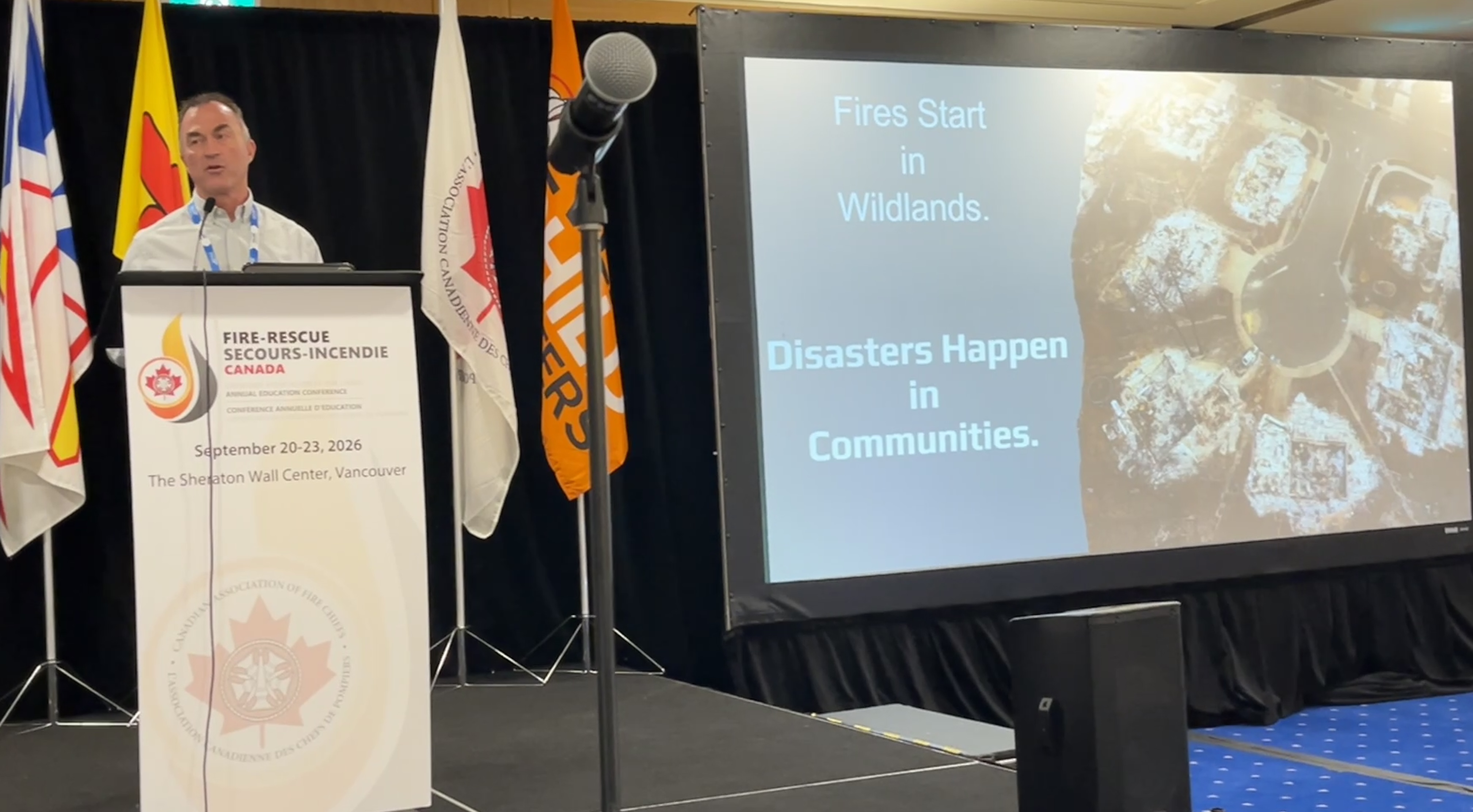
Wildland-urban interface fires and extreme weather events took center stage early in the program. Discussions focused on shifting responsibilities for municipal fire chiefs as wildfire seasons grow more severe across Canada.
The Changing Fireground: Sessions examined how wildland fires are increasingly becoming a local fire chief's primary concern, requiring new operational tactics and inter-agency coordination.
Building Community Resilience: Experts from climate adaptation institutes and regional fire leadership shared strategies for preparing communities, increasing local capacity, and implementing proactive mitigation models.
2. Leadership, Mental Health, and Psychological Safety
Occupational health and well-being were prominent focus areas throughout the conference, reflecting a growing industry emphasis on supporting personnel beyond physical safety.
Command Under Pressure: Presentations highlighted the importance of psychological safety, wellness, and maintaining strong command presence during high-stakes emergency situations.
The Psychological Cost of Leadership: Dedicated sessions explored the personal and mental health toll on senior leaders managing emergency organizations, offering guidance on resilience and return-on-investment for psychological programs.
Diverse Leadership Styles: Attendees explored non-traditional leadership models, including leveraging introverted leadership strengths within action-oriented environments.
3. Industry Innovation & Strategic Vision
The conference served as a platform for setting long-term policy and introducing updated regulatory standards.
CAFC Strategic Direction: The Canadian Association of Fire Chiefs (CAFC) presented its Strategic Plan for 2026–2030, outlining strategic priorities for advocacy, training, and policy over the coming years.
Code & Regulatory Updates: Technical experts briefed delegates on significant updates within the National Model Codes and emerging building performance standards.
Innovations & Partner Showcase: Throughout each day, concise "Lightning Talks" provided quick looks into emerging equipment, turnout gear, wildland defense technologies, software, and fleet solutions.
4. Diversity, Inclusion, and Research Expansion
Advancing equity and expanding the research base within the fire service were central to several key discussions.
Women Firefighter Health: Researchers presented efforts to establish national research priorities and networks specifically dedicated to female firefighter health and safety.
Actionable Allyship: Panels addressed actionable strategies for creating inclusive, supportive workplaces across departments of all sizes.
5. Networking and Off-Site Events
In addition to the educational programming, delegates connected through structured social events designed to foster camaraderie.
Vancouver Harbour Boat Cruise: Sponsored by Blackberry, delegates gathered for an evening cruise and dinner along the Vancouver waterfront.
Annual Awards Gala: The conference celebrated industry excellence during its formal Awards Gala, alongside social breakfasts and dedicated hospitality suites hosted each evening.
The speaker lineup for Fire-Rescue Canada 2026 brought together operational fire chiefs, leading researchers, communications specialists, and mental health professionals to address the multifaceted demands on modern fire departments.
Operational & Strategic Leadership
Superintendent Brian Hutchinson (BC Wildfire Service): Opening the wildfire discussions, Hutchinson brings extensive front-line experience in wildland incident command, focusing on how provincial wildfire challenges directly interface with municipal response boundaries.
Ret. Chief Phil Lemire & CAFC Board Leadership: Featuring established voices like former Chief Phil Lemire, BC Fire Commissioner John McKearney, and Kamloops Chief Ken Uzeloc, these sessions anchor discussions on the evolution of executive certification (ECFO) and the strategic vision of Canadian fire service governance through 2030.
Chief Paul Boissonneault & Panel: Leading sessions on inclusive workplaces, allies, and hockey culture connections, Boissonneault and fellow leaders (including Vancouver's Capt. Jenn Dawkins and former NHL players Daniel and Henrik Sedin) bridge organizational leadership with community and team dynamics.
Climate Science, Research & Policy
Dr. Anabela Bonada (Intact Centre on Climate Adaptation, University of Waterloo): A prominent climate scientist who translates climate resilience research into practical adaptation models for local fire departments, municipal planners, and community mitigation efforts.
Dr. Joy C. MacDermid (Western University): A leading health researcher focusing on occupational health, addressing gender-specific medical, physiological, and safety priorities to build national research frameworks for women firefighters.
Nick Yu (National Research Council Canada): Technical Advisor offering expert analysis on upcoming structural, fire, and safety revisions within the 2025 National Model Codes.
Mental Health & Organizational Psychology
Dr. Casey Iwai (Ottawa Fire Services): A specialized fire service psychologist focusing on the operational return-on-investment of psychological safety, post-incident recovery, and long-term mental health infrastructure.
Assistant Chief Laurie VandeSchoot (Okotoks Fire Rescue): Providing insights across multiple sessions, VandeSchoot addresses both the psychological cost of executive command and the practical value of introverted leadership styles in operational environments.
Communications, Culture & Training
Joanna Piros (Fireworks Consulting): A veteran journalist and media strategist who trains fire service leaders on crisis messaging, public speaking tactics, and effective command communication under public scrutiny.
Clara Capano (Capano Speaking & Training): Focusing on dynamic command presence, culture, and high-stakes workplace wellness, Capano offers actionable frameworks for maintaining team focus under extreme pressure.