
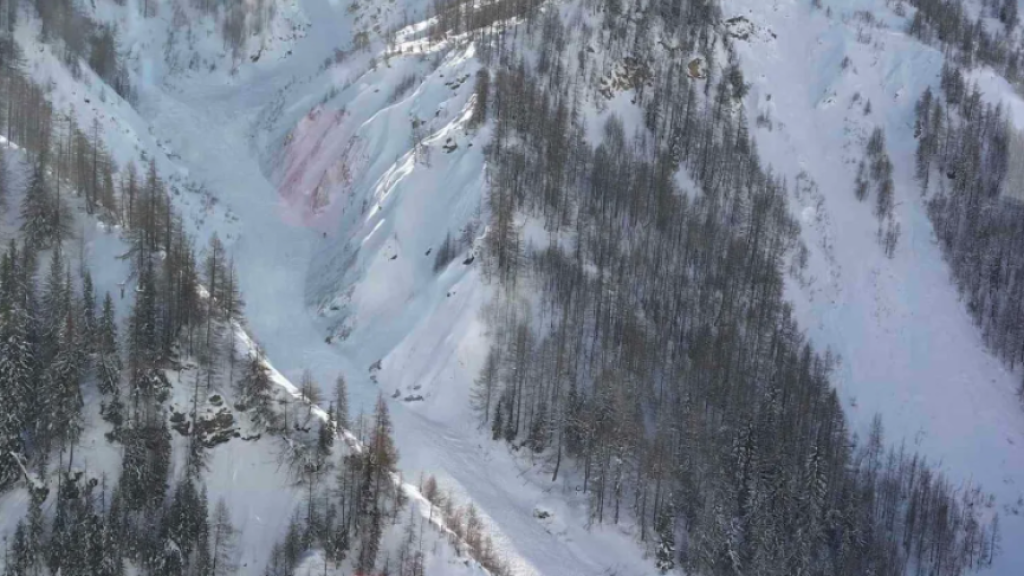
A wave of deadly avalanches killed 13 in one week in the Italian Alps - Unstable Alpine snow triggers nationwide warnings
Thank you for choosing Automatic Translation. Currently we are offering translations from English into French and German, with more translation languages to be added in the near future. Please be aware that these translations are generated by a third party AI software service. While we have found that the translations are mostly correct, they may not be perfect in every case. To ensure the information you read is correct, please refer to the original article in English. If you find an error in a translation which you would like to bring to our attention, it would help us greatly if you let us know. We can correct any text or section, once we are aware of it. Please do not hesitate to contact our webmaster to let us know of any translation errors.
During the first week of February 2026, Italy experienced an exceptionally unstable Alpine snowpack, leading to:
- 13 deaths in one week,
- 10 of them caused by avalanches,
- across Lombardy, Trentino, South Tyrol, Veneto, and Valle d’Aosta.
Italian Alpine Rescue (Corpo Nazionale Soccorso Alpino e Speleologico) described the snowpack as:
“exceptionally unstable… a single skier can trigger an avalanche.”
Italy’s Alpine rescue services faced one of their most dangerous weeks in recent memory as a series of avalanches across the northern regions killed 13 people, including 10 in avalanche incidents alone, according to reports from Italian authorities and international media.
The fatalities coincided with the opening days of the 2026 Winter Olympics hosted in Lombardy and Veneto. Although none of the incidents occurred inside Olympic venues, the crisis drew heightened national and international attention.
Italian Alpine Rescue (Corpo Nazionale Soccorso Alpino e Speleologico) described the snowpack as “exceptionally unstable”, warning that even a single skier could trigger a slide. Rescue teams conducted multiple high‑risk operations in Lombardy, Trentino, South Tyrol, Veneto, and Valle d’Aosta, deploying helicopters, canine units, and specialized avalanche crews.
The Associated Press reported that the victims included backcountry skiers, hikers, and mountaineers caught in sudden slab avalanches on popular off‑piste routes.
The AP noted that the instability followed a period of heavy snowfall combined with rapid temperature fluctuations, creating what experts called a “layered trap” in the snowpack.
Regional authorities issued repeated public warnings urging residents and tourists to avoid off‑piste terrain, check avalanche bulletins, and carry transceivers, probes, and shovels. Several ski areas temporarily closed high‑risk slopes as conditions deteriorated.
The avalanche wave overshadowed other fire‑and‑rescue activity in Italy during January and February, becoming the most widely discussed emergency‑services story of the period. Italian media emphasized the strain on Alpine rescue teams, who responded to dozens of calls in a matter of days.
The Civil Protection Department said investigations into the individual incidents were ongoing, but stressed that the week‑long cluster of fatalities reflected a broader pattern of increasingly volatile winter conditions in the Alps.
Photo Credit: Italian Alpine Rescue
The avalanche that killed two people in Courmayeur, Italy, on Feb. 15, 2026
Further reading:
https://www.yahoo.com/news/articles/avalanche-kills-2-skiers-amid-210012943.html?
https://www.cbsnews.com/news/record-deaths-italy-mountains-avalanches-winter-olympics-start/?
https://britbrief.co.uk/sports/extreme/pizzo-meriggio-avalanche-one-dead-major-…